Note: This document has been deprecated in favor of the ratified version at https://dwc.tdwg.org/cm/
On this page
- 1 Introduction
- 2 Overview (non-normative)
- 2.1 Event and Event hierarchies (non-normative)
- 2.2 Survey (non-normative)
- 2.3 Occurrence, Organism, and OrganismInteraction (non-normative)
- 2.4 Material Entity, Chronometric Age and GeologicalContext (non-normative)
- 2.5 Identification (non-normative)
- 2.6 NucleotideAnalysis, NucleotideSequence and MolecularProtocol (non-normative)
- 2.7 Agents (non-normative)
- 2.8 Media (non-normative)
- 3 Example implementations (non-normative)
- 4 Acknowledgements (non-normative)
Note: This document has been deprecated in favor of the ratified version at https://dwc.tdwg.org/cm/
Darwin Core conceptual model
- Title
- Darwin Core conceptual model
- Date version issued
- 2026-04-17
- Date created
- 2025-08-12
- Part of TDWG Standard
- http://www.tdwg.org/standards/450
- This version
- http://rs.tdwg.org/dwc/doc/cm/2026-04-17
- Latest version
- http://rs.tdwg.org/dwc/doc/cm/
- Previous version
- http://rs.tdwg.org/dwc/doc/cm/2025-09-03
- Abstract
- Guidelines for the semantics of relationships between Darwin Core classes.
- Contributors
- John Wieczorek (Rauthiflor LLC), Tim Robertson (Global Biodiversity Information Facility), Paula Zermoglio (Instituto de Investigaciones en Recursos Naturales, Agroecología y Desarrollo Rural (IRNAD, CONICET - Universidad Nacional de Río Negro), San Carlos de Bariloche, Río Negro, AR), Cecilie Svenningsen (Global Biodiversity Information Facility), Kate Ingenloff (Global Biodiversity Information Facility), Markus Döring (Global Biodiversity Information Facility), Peter Desmet (INBO), Tobias Guldberg Frøslev (Global Biodiversity Information Facility)
- Creator
- Darwin Core Maintenance Group
- Bibliographic citation
- Darwin Core Maintenance Group. 2026. Darwin Core conceptual model. Biodiversity Information Standards (TDWG). http://rs.tdwg.org/dwc/doc/cm/2026-04-17.
1 Introduction
1.1 Purpose (non-normative)
The Darwin Core Conceptual Model (DwC-CM) provides a high‑level framework that shows how Darwin Core (DwC) classes relate to one another in typical biodiversity information workflows. Darwin Core formally defines a set of terms grouped by classes; DwC‑CM clarifies the conceptual meaning of those classes and the relationships among them so implementers can make consistent, interoperable design choices across different technologies.
The DwC‑CM does not prescribe an ontology of formal predicates for the relationships between classes. Instead, it uses natural‑language labels to convey semantic intent.
The DwC-CM does not prescribe the implementation of systems based on Darwin Core using any particular technology. The model is not a strict blueprint for system design; instead, it is a reference framework that can be applied in whole or in part. An implementation can include entities and relationships that are not in the Conceptual Model. This includes using a less strict cardinality than is suggested by a predicate in this document, if warranted. Different system architectures may realize the model in different ways—for example:
- A relational database or tabular data publishing schema may represent relationships through joins across normalized tables.
- A document-oriented approach may choose to embed related classes as nested objects within a record rather than by linking separate records.
- A graph database may represent relationships as explicit links between nodes.
The DwC-CM is a synthesis of discussion within the Biodiversity Information Standards (TDWG) community. It accommodates the observed use of DwC to date and accommodates the results of a wide variety of targeted case studies to broaden the scope of Darwin Core. It does not attempt to anticipate every possible use, and it is expected to evolve as the demand for new uses arises.
By clarifying the conceptual relationships between Darwin Core classes, the DwC-CM helps implementers understand which connections are essential and the minimum cardinalities involved so that implementations are fundamentally consistent and correctly adapted in specific technical environments.
1.2 Audience (non-normative)
This guide is intended for developers, data architects, and system designers who are building applications, databases, or services that rely on Darwin Core. It highlights how the conceptual model can be used as a reference when making design decisions, ensuring both consistency when using the Darwin Core standard and flexibility in implementation.
This guide is will also play an important role for scientists (in particular scientists dealing with data intensive workflows) to better understand what entities like Occurrence, Event, and Location mean, how they are related, and how they are supposed to be used. This matters, for example, when designing analyses, merging datasets, or interpreting integrated data.
1.3 Associated Documents (non-normative)
The following resources are closely related and are recommended reading:
- Darwin Core Quick Reference Guide (abridged presentation of currently recommended Darwin Core term versions)
- Darwin Core List of Terms (complete normative definitions of all Darwin Core term versions)
- Darwin Core Data Package Guide (specification for creating Darwin Core data packages)
- Darwin Core Data Package Quick Reference Guide (contextual term definitions for tables and fields for a Darwin Core Data Package implementation of DwC-CM)
- Darwin Core Data Package Designer (tool to find terms, explore and visualize relationships, and build Darwin Core Data Package descriptors)
1.4 Status of the content of this document (normative)
Sections may be either normative (defines what is required to comply with the standard) or non-normative (supports understanding but is not binding) and are marked as such.
All sections of this document except this one are non-normative.
1.5 Notes on diagrams (non-normative)
Diagrams in this document are class diagrams. The boxes represent Darwin Core classes and the lines connecting the boxes represent established relationships between classes. Boxes do not represent instances of those classes (e.g., a specific Event as opposed to Events in general). For example, in Figure 1, the Organism Interaction class has two relationships to the Occurrence class. This does not mean that both relationships necessarily apply to the same Occurrence (instance). Indeed, most Organism Interactions involve two distinct Occurrence instances (two specific Organisms interacting in the same Event).
In Figures 2-9, the relationships between classes are labeled with predicates that describe that relationship succinctly using explanatory natural language. This document does not prescribe specific predicates from controlled vocabularies or ontologies.
Throughout the text, when a class is referred to in the plural, this is done by including the plural form of the class label within the formatting. Thus, Material Entities refers to multiple instances of the class labeled Material Entity, not to a single instance of a class labeled Material Entities.
2 Overview (non-normative)
The Darwin Core Conceptual Model is meant to facilitate understanding of established relationships between Darwin Core classes. This document relies on diagrams of these relationships with accompanying descriptions.
Throughout the diagrams in this document, classes are referred to with the labels recommended by Darwin Core in bold (e.g., Material Entity for the class http://rs.tdwg.org/dwc/terms/Material Entity). In the narrative, classes are referred to by their names in italics, (e.g., Material Entity). Thus, for example, when Organism is used, it is meant precisely in the sense of http://rs.tdwg.org/dwc/terms/Organism.
Figure 1 provides an overview of the DwC-CM. To avoid clutter, the nature of the relationships (directionality, cardinality and predicates) are omitted. This diagram also omits the vast number of possible relationships between the classes Agent, Media Entity, and Protocol to all of the other classes in the model. Relationships are described in detail in the thematic sections that follow the Overview.
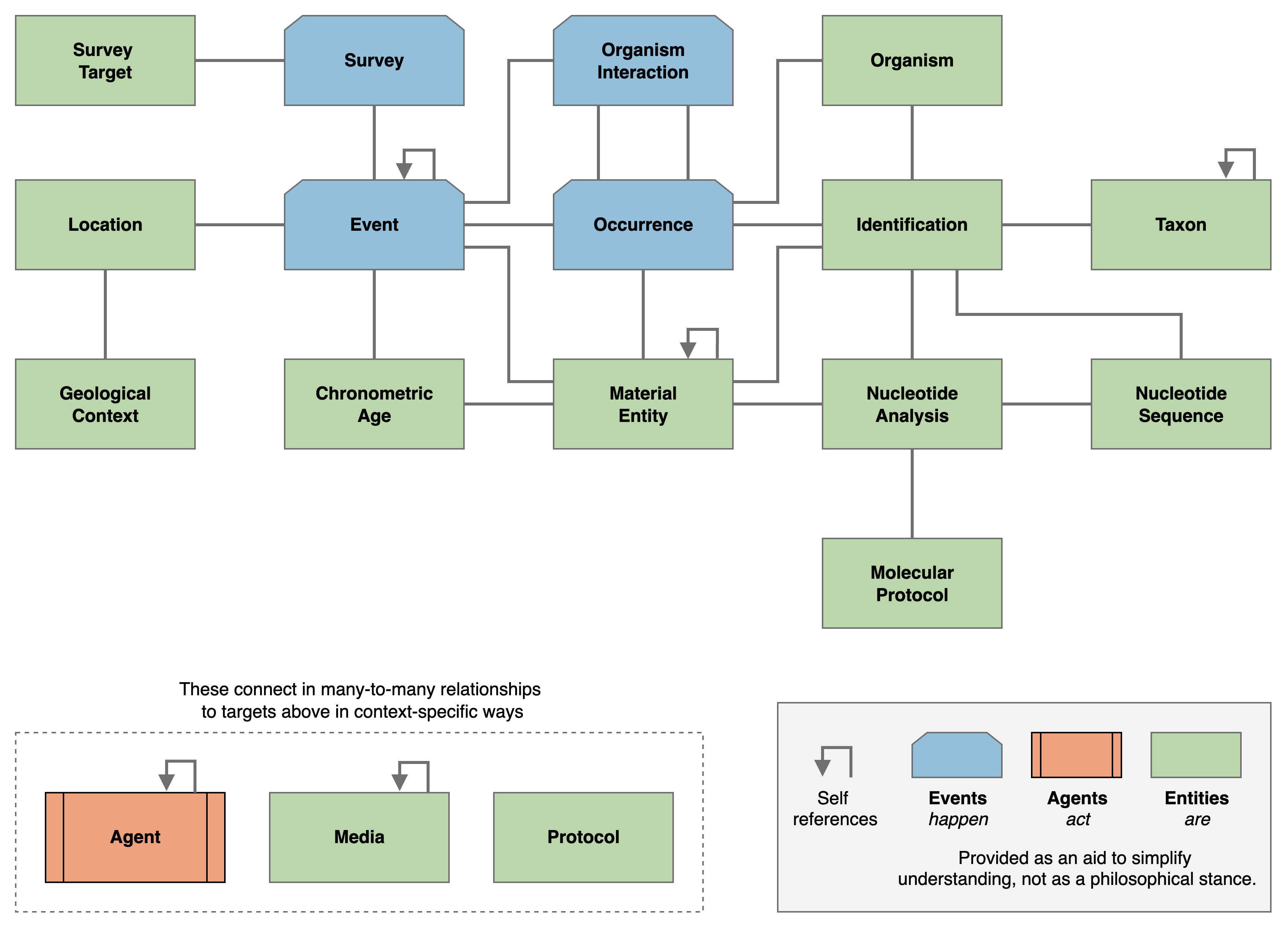
Figure 1. An overview of the Darwin Core Conceptual Model. Boxes represent classes and lines represent relationships between classes.
2.1 Event and Event hierarchies (non-normative)
In Darwin Core, an Event is an action, a process, or a set of circumstances occurring at some place during some interval of time. Figure 2 illustrates the basic types of Events in the DwC-CM.
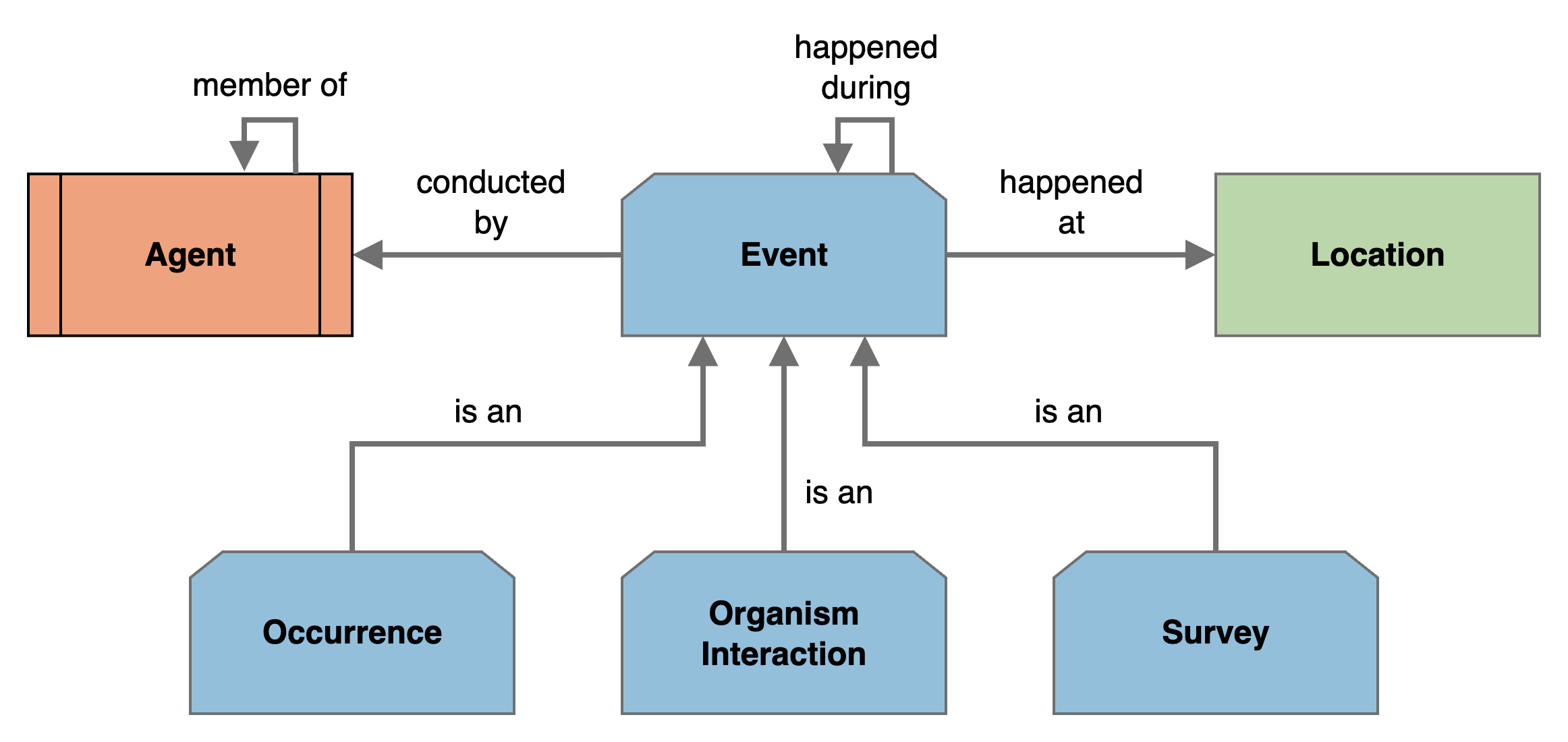
Figure 2. Details of the fundamental relationships of Events, of which there are four basic types – Occurrences, Organism Interactions, Surveys, and generic Events. Material gathering is considered here as a generic Event.
Description
-
An Event is expected to include properties that document its nature (e.g., material gathering, observation, device deployment, expedition, etc.) and that document the time interval it spanned.
-
Special types of Events (Occurrences, Organism Interactions, and Surveys) have distinct special characteristics in addition to those that cover their Event nature.
-
Events must happen at some Location, even if that Location is not known or not shared. Many distinct Events can happen at the same Location.
-
Events may be conducted by Agents (e.g., people, organizations, groups, devices, software, etc.). Many distinct Events can be conducted by the same Agent. Agents may have many other distinct roles (e.g., funded, observed, archived, etc.) in relation to Events that are not explicitly defined here (i.e., not shown in Figure 2).
-
Events can be nested in hierarchies. An Event hierarchy is structured on the premise that one Event (a child) is contained entirely within another Event (its parent), both spatially and temporally, and with some dependent connection. An Event can be the parent for many distinct Events, but it can have only one parent Event. An example of an Event hierarchy is a project (an Event) in which several camera trap deployments (Events) were made, each of which resulted in series of Media Entity captures (Events), some of which provided evidence for one or more Occurrences (Events).
Simplifications
Figure 2 represents a small subset of the DwC-CM, focusing only on the fundamental aspects of Events. Events can be related to many other classes in the DwC-CM. Those relationships are covered in further thematic sections below.
Connections to Event from Occurrence, Organism Interaction, and Survey must not be interpreted to mean that a single Event can be a combination of those three classes. It only means that those three classes have Event properties in addition to their own distinct properties.
Implementation notes
In theory, each distinct action, process, or set of circumstances occurring at some place during some interval of time is a distinct Event. In practice, it may be beneficial to allow a single Event to provide the spatio-temporal context for multiple activities simultaneously. For example, an Organism Interaction most often happens at the same place and time as each Occurrence it is related to. The Organisms involved in the interaction may also have been gathered at the same time. For all of these activities, the spatio-temporal information is the same. Rather than require the creation of five Event instances for the same place and time, a single Event could be created and referred to by the Organism Interaction, by both Occurrences, and by both the Material Entities that were gathered. Care must be taken in this implementation choice to allow the option to designate an Event as multi-faceted (e.g., dwc:eventCategory context).
Depending on the intended use of Event data, it may simplify data sharing models to subsume Location information within Events.
2.2 Survey (non-normative)
In Darwin Core, a Survey refers to an Event that is a biotic survey or inventory, which, with sufficiently detailed information, can support not only evidence of presence of Organisms but also absences of detection and estimations of abundance. Figure 3 illustrates the part of the DwC-CM most closely related to Surveys.
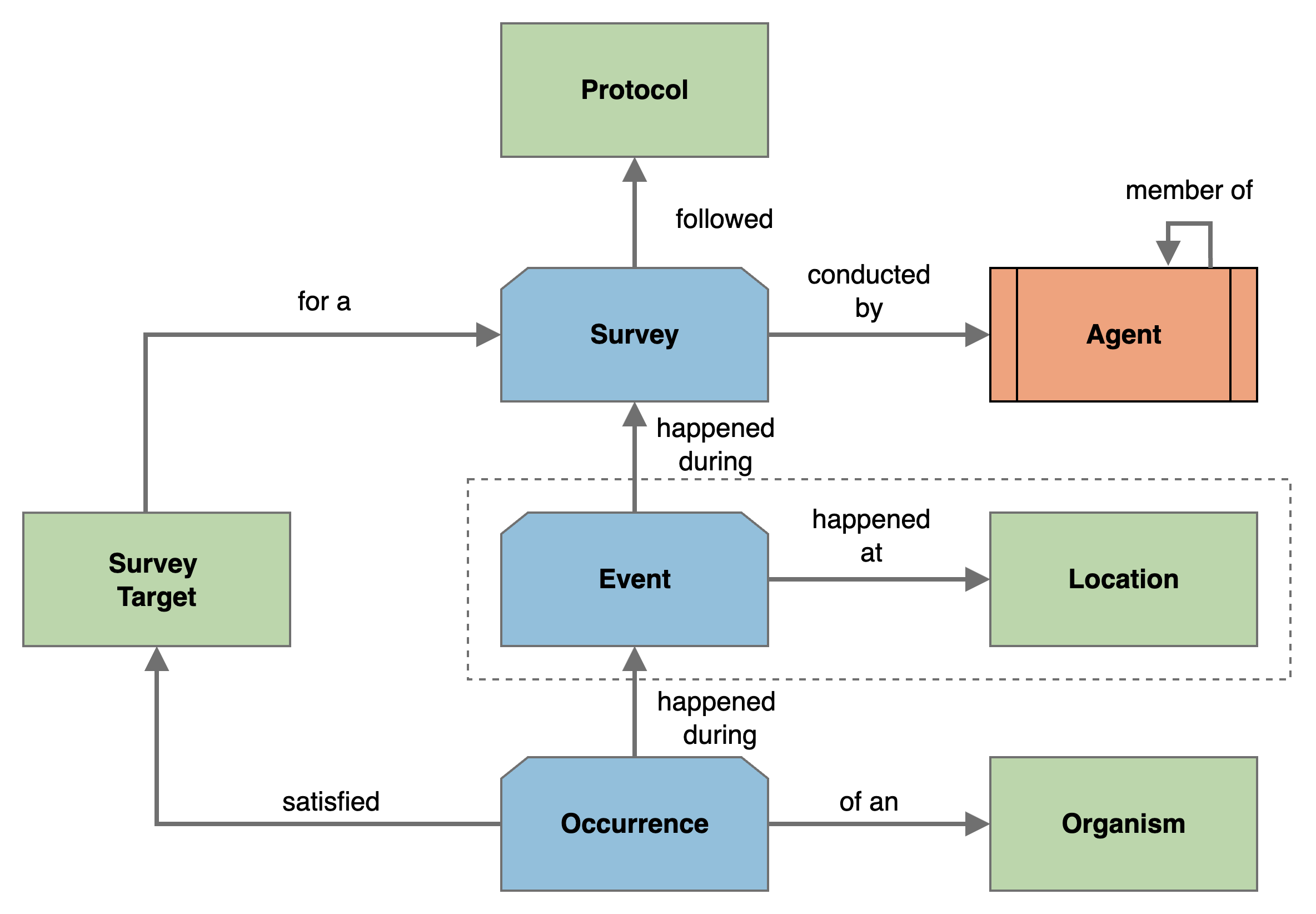
Figure 3. Details of the fundamental relationships associated with Surveys.
Description
-
Since a Survey is a type of Event, it happens at a Location, can be conducted by an Agent, and can participate in an Event hierarchy, all as described in the Event section. The Event hierarchy relationships in the diagram are labeled with “happened during”.
-
Complex structured Surveys can be expressed through an Event hierarchy. For example, a regional monitoring program (Survey) could consist of multiple repeated Surveys with the same or distinct Protocols conducted by different groups of people (Agents) with distinct devices (Agents) at specific sites (Locations).
-
Being a special type of Event, a Survey has special characteristics in addition to those due to its Event nature. Many of these characteristics are defined in the list of terms for the Humboldt Extension to Darwin Core.
-
One important aspect of Surveys is that they often adhere to documented Protocols, where a Protocol is a method used during an action. A Survey may follow many different kinds of Protocols, including protocols for sampling and sampling effort (time spent, area covered, distance travelled, participants involved, etc).
-
In conjunction with Protocols, a Survey can be limited to specific Survey Targets. A Survey Target is intended to declare what was being sought, either through a priori intention or through post facto filtering.
-
The results of a Survey are expressed in the Occurrences it reports. Those Occurrences may be incidental (“bycatch”) or they might match the criteria in a Survey Target.
-
Survey Targets can be defined based on any combination of taxa, environmental conditions, organismal traits, etc. With sufficient supporting information, such as Occurrences accompanied by organism quantities, and whether reporting for the target was complete, a Survey has the potential to support inference of absence of detection, estimations of abundance, and statistical analyses of change over time.
Simplifications
Figure 3 is a small subset of the DwC-CM focusing on Surveys. Additional relationships such as Media Entities recorded, Material Entities gathered, and Identifications of Organisms, among others, are omitted here. Those relationships are covered in further thematic sections below.
2.3 Occurrence, Organism, and OrganismInteraction (non-normative)
In Darwin Core, the Occurrence class has had a long history of evolving meaning. It originated from the need to capture information about organisms in nature along with the evidence gathered (observations and specimens) to support the use of that information. The original definition of the term, “The category of information pertaining to evidence of an occurrence in nature, in a collection, or in a dataset (specimen, observation, etc.)”, betrayed its semantic ambiguity. With the addition of Material Sample in 2013 and Organism in 2014, the semantics of Darwin Core became more clearly defined. In 2023, the introduction of Material Entity gave Occurrence its modern definition: “A dwc:Event that establishes the state of a dwc:Organism at a particular place and time.” The “state” of a dwc:Organism covered by the dwc:Occurrence class consists of attributes of a dwc:Organism that can differ between dwc:Occurrences, such as dwc:lifeStage, dwc:sex, dwc:reproductiveCondition, dwc:behavior, weight, color, etc.
An Organism is defined in Darwin Core as “A particular organism or defined group of organisms considered to be taxonomically homogeneous.” Organisms manifest both permanent and ephemeral characteristics. For example, the date a mammal was born, and the identity of its mother will never change, though its life stage and reproductive condition can. An Occurrence can capture the ephemeral state of a particular Organism at a place and time or posit that there was some Organism there and then based on indirect evidence.
Figure 4 illustrates how the DwC-CM relates Occurrence, Organism, and Organism Interaction.
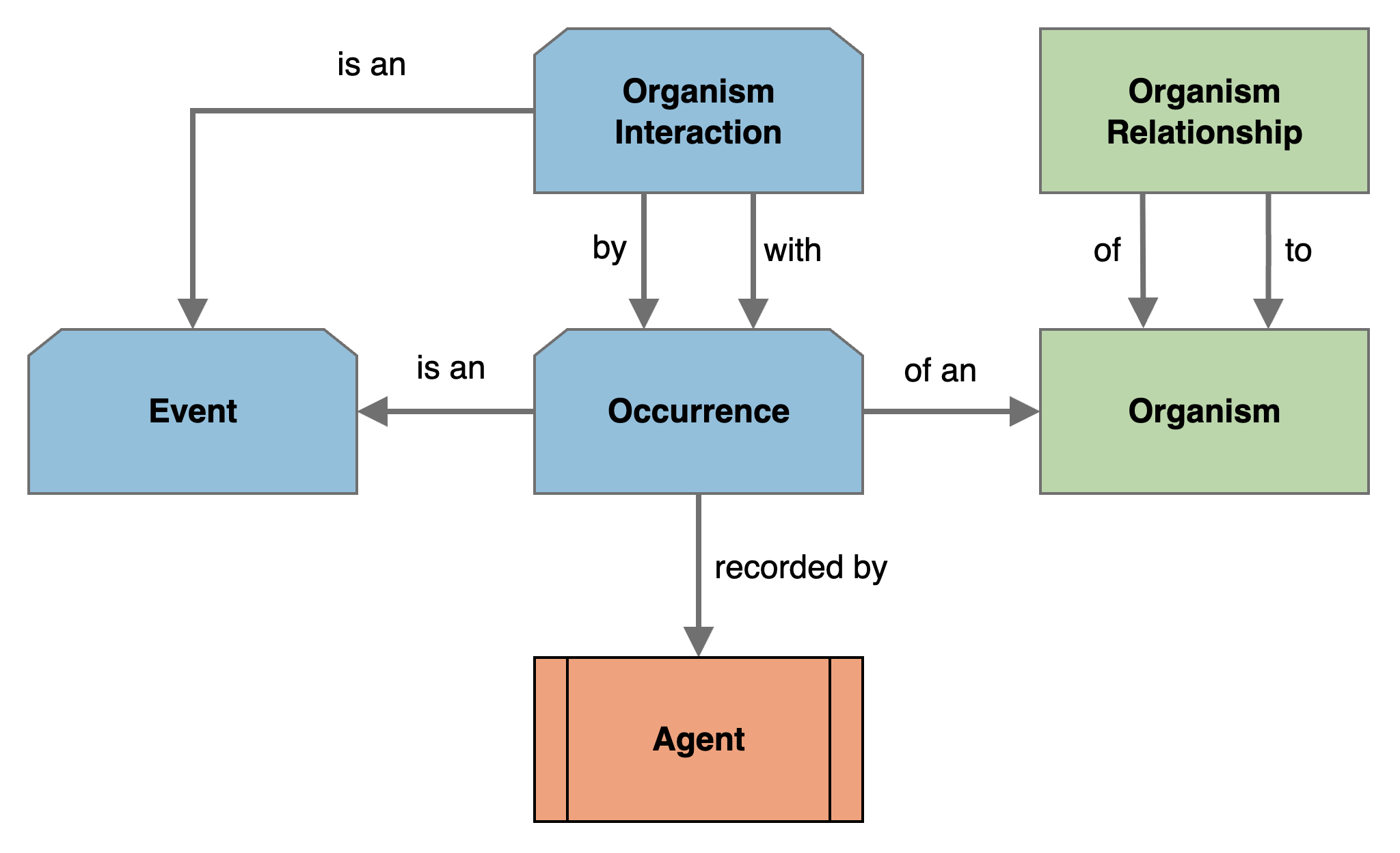
Figure 4. Details of the fundamental relationships relating Occurrence and Organism.
Description
-
Since an Occurrence is a type of Event, it happens at a Location, can be conducted by an Agent, and can participate in an Event hierarchy, all as described in the Event section.
-
Being a special type of Event, an Occurrence has special characteristics in addition to those due to its Event nature. Specifically, an Occurrence represents an Event in which there was one of 1) a direct observation of an Organism, 2) or indirect inference that Organism existed, or 3) the absence of detection of any Organism of a given Taxon in a particular state (e.g., exhibiting a behavior, having a particular trait, etc.) during the given time interval at the given Location, potentially recorded by an Agent.
-
An Organism can be present in many Occurrences, each time with potentially different characteristics.
-
The permanent characteristics of the Organism are properties of that class.
-
The permanent relationships (e.g., mother of, sibling of, etc.) of Organisms to other Organisms are represented by the Organism Relationship class.
-
Non-permanent relationships between Organisms can be represented by Organism Interactions. Note that these interactions are explicitly at the Organism level, not at the Taxon level. Thus, you would expect observed interaction types such as “visited” rather than habitual interactions types such as “visits”. Similarly, you should not capture an interaction type such as “parasitoid of” unless that behavior was observed for that particular Organism, in which case a better relationship phrase might be “parasitized”.
-
Figure 4 shows two relationships between Organism Interaction and Occurrence. One of these is to represent the actor or subject side of the interaction while the other is to represent the target or object side of the interaction. In practice, this would usually involve creating two Occurrence records (instances) — one for each Organism. In the special case of an Organism engaged in a self-directed behavior, only one Occurrence record is needed, which can be pointed to by both the
byandwithrelationships. -
The two Occurrences participating in an Organism Interaction are different things that happened at the same place and time (e.g., the behaviors of the two participating Organism could easily be different). The Organism Interaction is yet something else that happened at that same Location and time. Though all three of these Events may (but do not necessarily) share the same spatio-temporal context, the activities were distinct. For example, a hummingbird was flying (a behavior characterizing one Occurrence) as it “drank nectar from” (the interaction with) a flower (the other Occurrence). The Organism Interaction did not fly, the hummingbird did. The interaction is its own Event with its potentially own characteristics apart from those of the Occurrences.
Implementation notes
The implementation notes in the Event section also apply to Occurrences and Organism Interactions, namely, that in practice it may be beneficial to allow a single Event to provide the spatio-temporal context for multiple activities (two Occurrences and their corresponding Organism Interaction).
Depending on the intended use of Occurrence and Organism data, it may simplify data sharing models to subsume Organism information within Occurrences.
2.4 Material Entity, Chronometric Age and GeologicalContext (non-normative)
In Darwin Core, a Material Entity is defined as “An entity that can be identified, exists for some period of time, and consists in whole or in part of physical matter while it exists.” The DwC-CM provides a framework for representing the relationships between Material Entities and other classes that provide the contexts in which they are found and used, as shown in Figure 5.
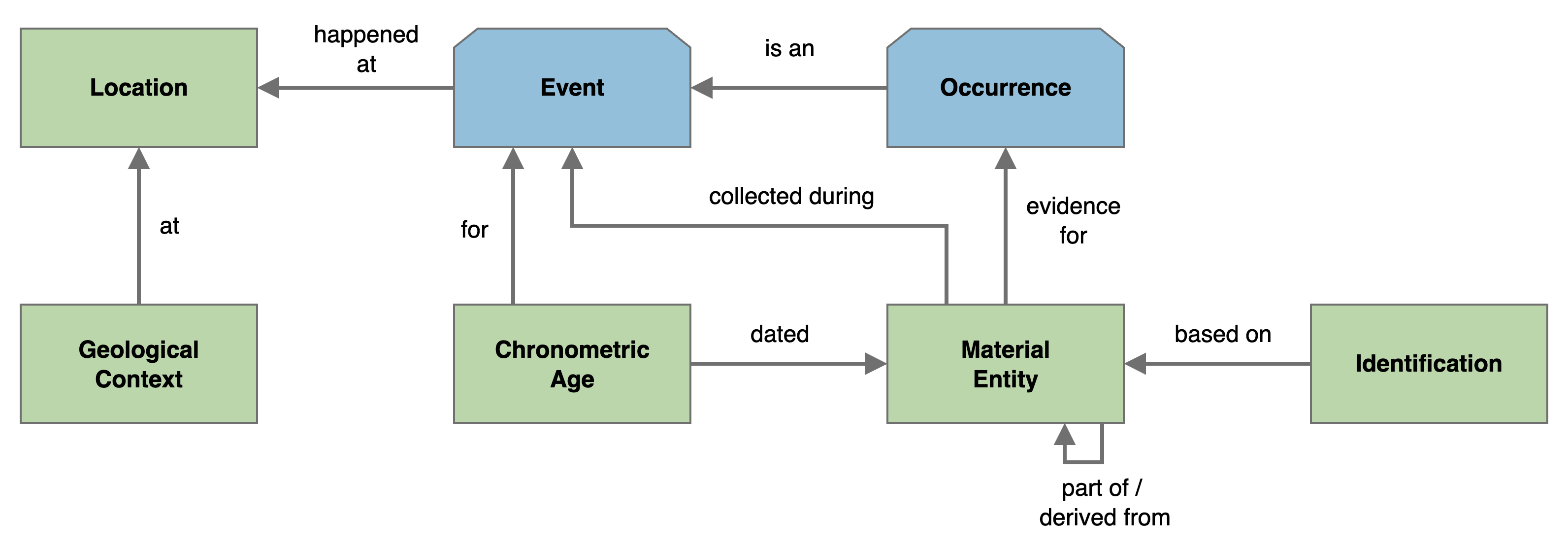
Figure 5. Details of the fundamental relationships of specimens and material samples expressed as Material Entities.
Description
-
A Material Entity represents physical matter that may be gathered (in whole) or sampled (in part) during an Event at a specific Location and time.
-
A Material Entity may consist of, for example, an entire Organism, a part of the Organism (e.g., a leaf), a member of an Organism that is a group (e.g., a fish in a jar), non-biological material (e.g., a rock, an ice core), some environmental material (e.g., soil), or a DNA extract.
-
A Material Entity may be the subject of interest while being part of, yet not separate from, a containing Material Entity. For example, a fossil in a rock.
-
A Material Entity may be processed in some way that removes a part of the original material, resulting in new Material Entities. For example, a skeleton removed from the full body of an Organism. This can be expressed using the “derived from” relationship from the extracted Material Entity to the source Material Entity. When a Material Entity is derived from another Material Entity, the two parts become distinct from each other and distinct from the original Material Entity. The DwC-CM does not take a stance on the generation of new Material Entity instances other than that the derived and derived-from Material Entities must both have instances.
-
An Identification may be based on evidence in the form of a Material Entity. The gathering context (Event) of that Material Entity may in turn provide evidence of an Occurrence.
-
The context during the gathering Event for a Material Entity may provide evidence of a remote (in time or place) Occurrence. The Occurrence might be derived from a GeologicalContext at the gathering Location, or from a Chronometric Age determination (e.g., radiocarbon dating) based either on the Material Entity itself or based on a datable associated Material Entity or context.
Simplifications
In DwC-CM, the Darwin Core Material Sample class is omitted in favor of Material Entity because the narrower scope of Material Sample is of little practical use. A Material Sample is simply a Material Entity that was derived from another Material Entity whether explicitly or not.
2.5 Identification (non-normative)
In Darwin Core, an Identification is defined as “A classification of a resource according to a classification scheme.” For Organisms, this means, “A taxonomic determination (i.e., the assignment of a dwc:Taxon to a dwc:Organism)”. Figure 6 illustrates how DwC-CM relates Identification to other classes.
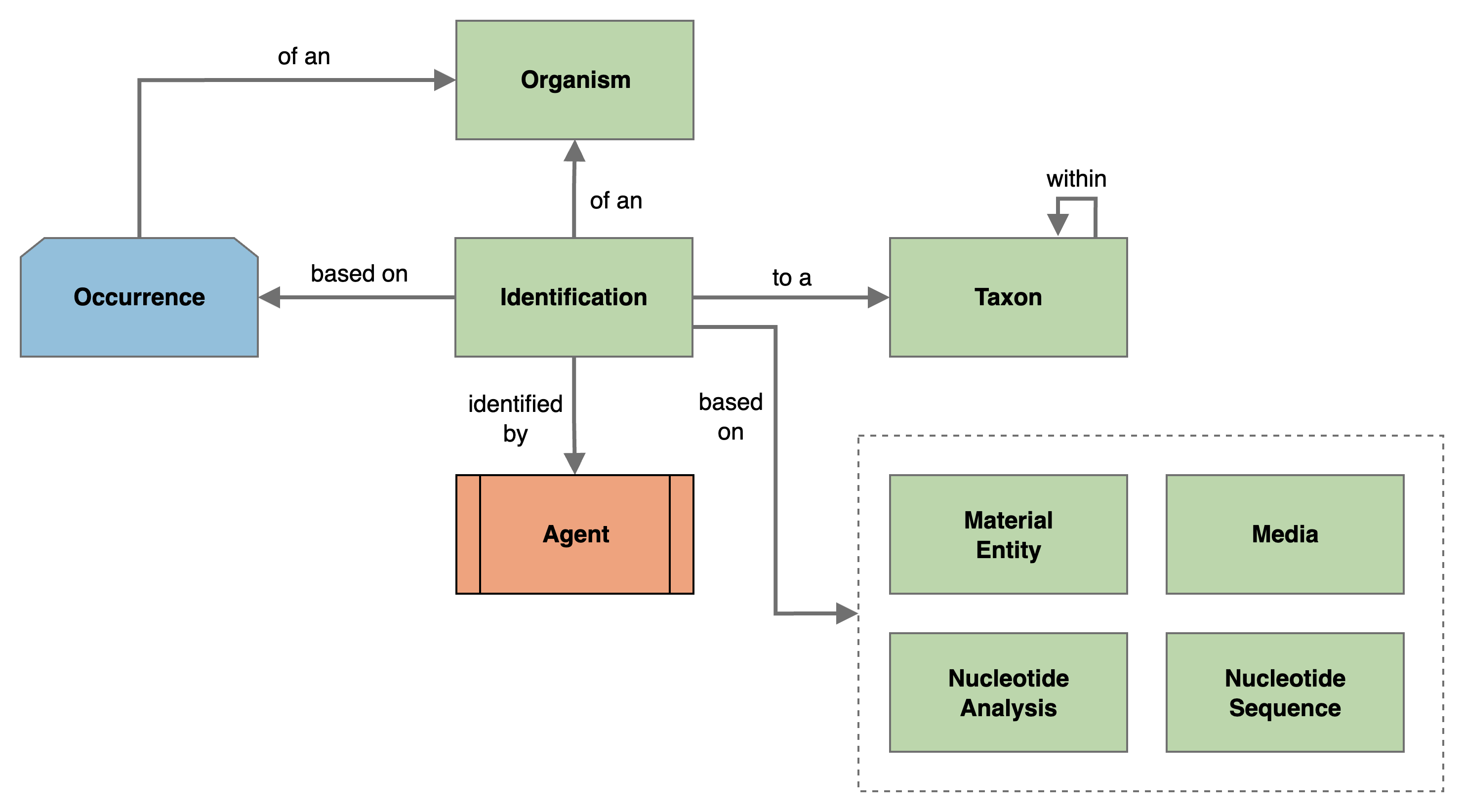
Figure 6. Details of the fundamental relationships between Identification and other classes.
Description
-
An Identification expresses an opinion by an Agent (human or otherwise) that an Organism or other Material Entity (whether observed or inferred) was a member of a class within a classification scheme. Organism example: an Identification registers an opinion that an Organism is a member of the set of all Organisms that make up a Taxon, ideally based on verifiable evidence. Non-Organism Material Entity example: an Identification registers an opinion that a mineral (Material Entity) has the characteristics that qualify it to be given a specific mineral name according to a classification scheme.
-
A Taxon can occupy a rank in a hierarchical classification system.
-
There can be multiple Identifications for a single Organism or other Material Entity, including historical ones, accepted ones, and differing opinions, each according to an Agent.
-
An Agent can make an Identification based on an observation of an Occurrence of an Organism without verifiable evidence.
-
An Agent can be responsible for making many Identifications.
-
In addition to Identifications based solely on observations, there can be Identifications based on several other kinds of evidence:
- the inspection or processing of a Media Entity of an Occurrence by an Agent,
- the inspection or processing of a Material Entity by an Agent,
- the inspection or processing of a Media Entity of a Material Entity by an Agent, or
- a Nucleotide Analysis that detects a Nucleotide Sequence or confirms the presence of evidence of an Organism representing a Taxon. This may subsequently be used to infer an Occurrence (see the Nucleotide Analysis section).
Simplifications
Figure 6 shows a single arrow from Identification to the group of distinct classes that it might be based on. The arrow signifies that each of those targets is possible, not that they all must contribute to a given Identification. Indeed, a given Identification must be based on only one of those classes, though multiple Identifications based on distinct classes might yield the same Taxon determination.
Implementation notes
Depending on the intended context of Identification and Taxon data, it may simplify data sharing models to subsume Taxon information within Identifications.
2.6 NucleotideAnalysis, NucleotideSequence and MolecularProtocol (non-normative)
The DwC-CM provides a framework for representing Nucleotide Analyses, accommodating:
- Metabarcoding and metagenomic techniques for detecting taxa in sampled Material Entities.
- Targeted DNA-based assays (e.g., qPCR) to confirm the presence or absence of specific target Taxa.
- Integration of sequence-based (barcoding) and non-sequence-based Identifications derived from the same Material Entity.
These cases are represented within the model as depicted in Figure 7.
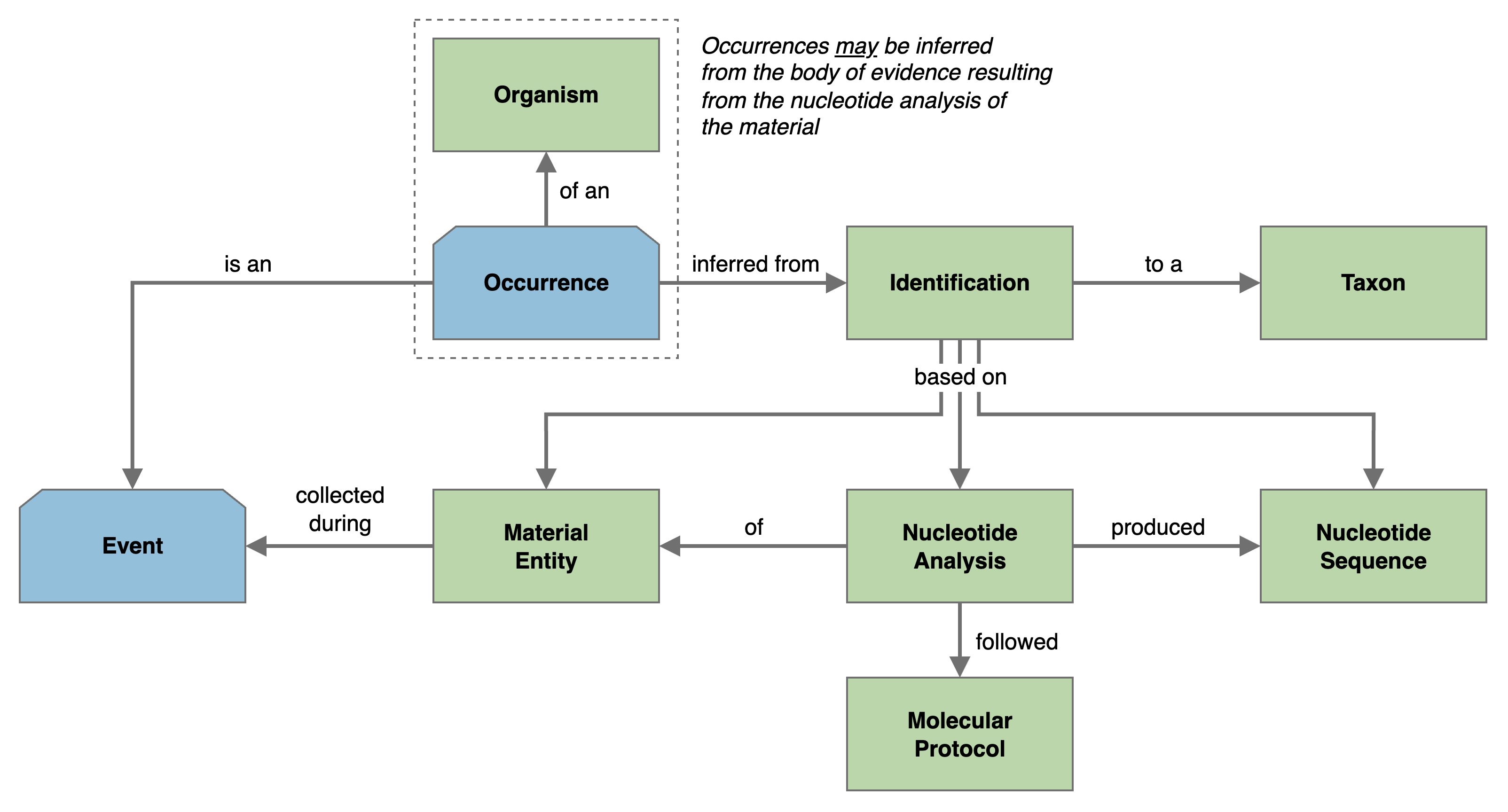
Figure 7. Details of the fundamental relationships associated with Nucleotide Analyses.
Description
-
A Nucleotide Analysis of a Material Entity follows a Molecular Protocol that records the procedures used (e.g., primers, target regions).
-
The Material Entity is linked to the originating Event, documenting when, where, and by whom it was gathered, along with any additional context.
-
A Nucleotide Analysis may produce one or more Nucleotide Sequences, or may only confirm the presence or absence of the Molecular Protocol target.
- The Material Entity, Nucleotide Analysis, and Nucleotide Sequence provide evidence for one or more Identifications based on:
- the Material Entity alone (e.g., a human Agent identifying an Organism),
- a Nucleotide Analysis detecting or confirming the presence of one or more target Taxa, or
- comparisons of detected Nucleotide Sequences against a reference catalogue (potentially yielding many Identifications).
- The resulting body of evidence may be used to infer the Occurrence of an Organism in the sampled Material Entity — whether a taxon-specific detection (e.g., qPCR) or from sequenced genomic reads or barcode genes that are identified from matching with a DNA reference database (e.g., barcoding, metabarcoding, and metagenomics).
Simplifications
Agents (e.g., people) responsible for activities are omitted here, but can be associated with the relevant classes (see the Agent section).
A Material Entity may be either a defined part of or derived from another Material Entity, such as a tissue extract (see the Material Entity section).
An Event representing the gathering of the Material Entity may belong to a larger Survey or to a hierarchy of nested Events (see the Event and Survey sections).
Implementation notes
Inferred Occurrences should be subject to data quality control or confidence measures, since several factors may affect detection results. The DwC-CM does not prescribe how such measures should be implemented.
In some cases, the analyzed Material Entity is not preserved or documented. If so, implementers may link the Nucleotide Analysis directly to the relevant sampling Event to provide the spatio-temporal context and allow Occurrence inferences to be made.
2.7 Agents (non-normative)
In Darwin Core, an Agent is defined as “A resource that acts or has the power to act” with the following usage comment:
A person, group, organization, machine, software or other entity that can act. Membership in the dcterms:Agent class is determined by the capacity to act, even if not doing so in a specific context. To act: To participate in an event or process by contributing through behavior, operation, or an effect resulting from active participation — regardless of whether that contribution is intentional, volitional, or conscious.
Agents have the capacity to act in relation to any other class as well as to be related to each other. Figure 8 shows a few examples that illustrate the ways in which Agents can be related to other classes in the DwC-CM.
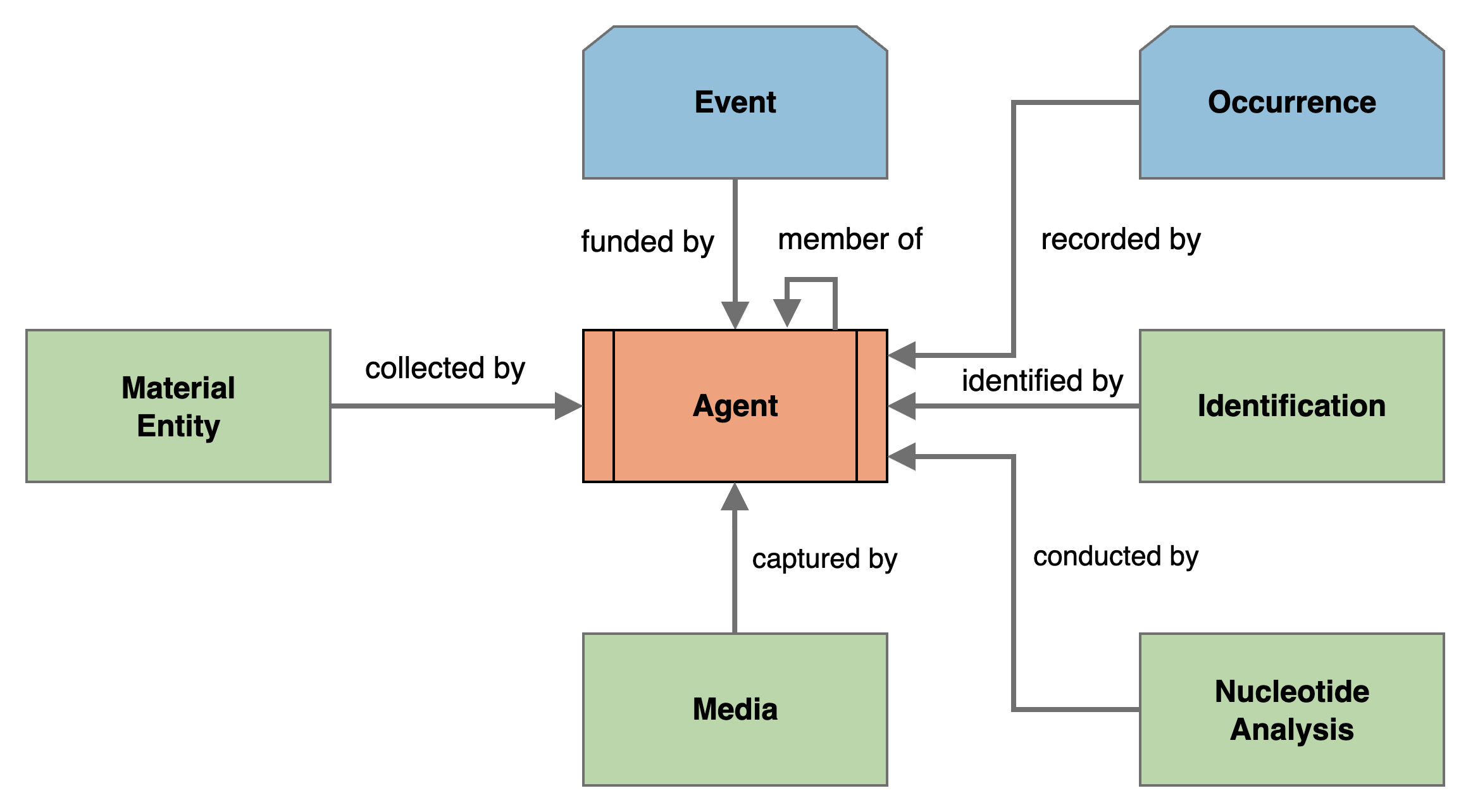
Figure 8. Details of the ways in which Agents can be related to other classes. The labels on the relationships all represent well-established Agent relationships, but constitute only a few of the many relationships one might want to establish.
Description
-
An Agent is distinguished by its capacity to act, but is not otherwise limited in its nature.
-
An Agent may be related to another Agent. For example, a person (an Agent) might belong to a crew (an Agent that is a group of people), deploy a camera trap (an Agent that is a device), or be associated with an institution (an Agent) that owns the device.
-
In addition to relationships between Agents, the DwC-CM supports any relationship that involves an Agent acting in or otherwise fulfilling a role with respect to an instance of another class. For example, a Material Entity can be identified by an Agent. This relationship might be enabled by a dedicated “identifiedByID” property for the Material Entity. This is a convenient way to capture well-established Agent roles.
Simplifications
There are myriad ways in which an Agent might be related to other classes. This section shows only a few examples without prescribing the details of how those relationships should be implemented.
Implementation notes
In practice, classes may be directly related to Agents through dedicated properties that expect to be populated with an Agent identifier. Examples from Darwin Core of this way of connecting classes with Agents include terms such as identifiedByID and recordedByID along with many others from the dwciri: namespace.
In addition to direct relationships through properties of classes as described in the previous paragraph, any relationship involving an Agent for which there is no dedicated property on the target class could be constructed through the implementation of an Agent Role, which would join an instance of Agent to an instance of another class and declare the relationship type.
2.8 Media (non-normative)
In Darwin Core, Media Entities are things that are recorded (e.g, instances of the Dublin Core type vocabulary terms Still Image, Moving Image, Sound, and Text). The DwC-CM provides a framework for representing the relationships of Media Entities to other classes as shown in Figure 9.
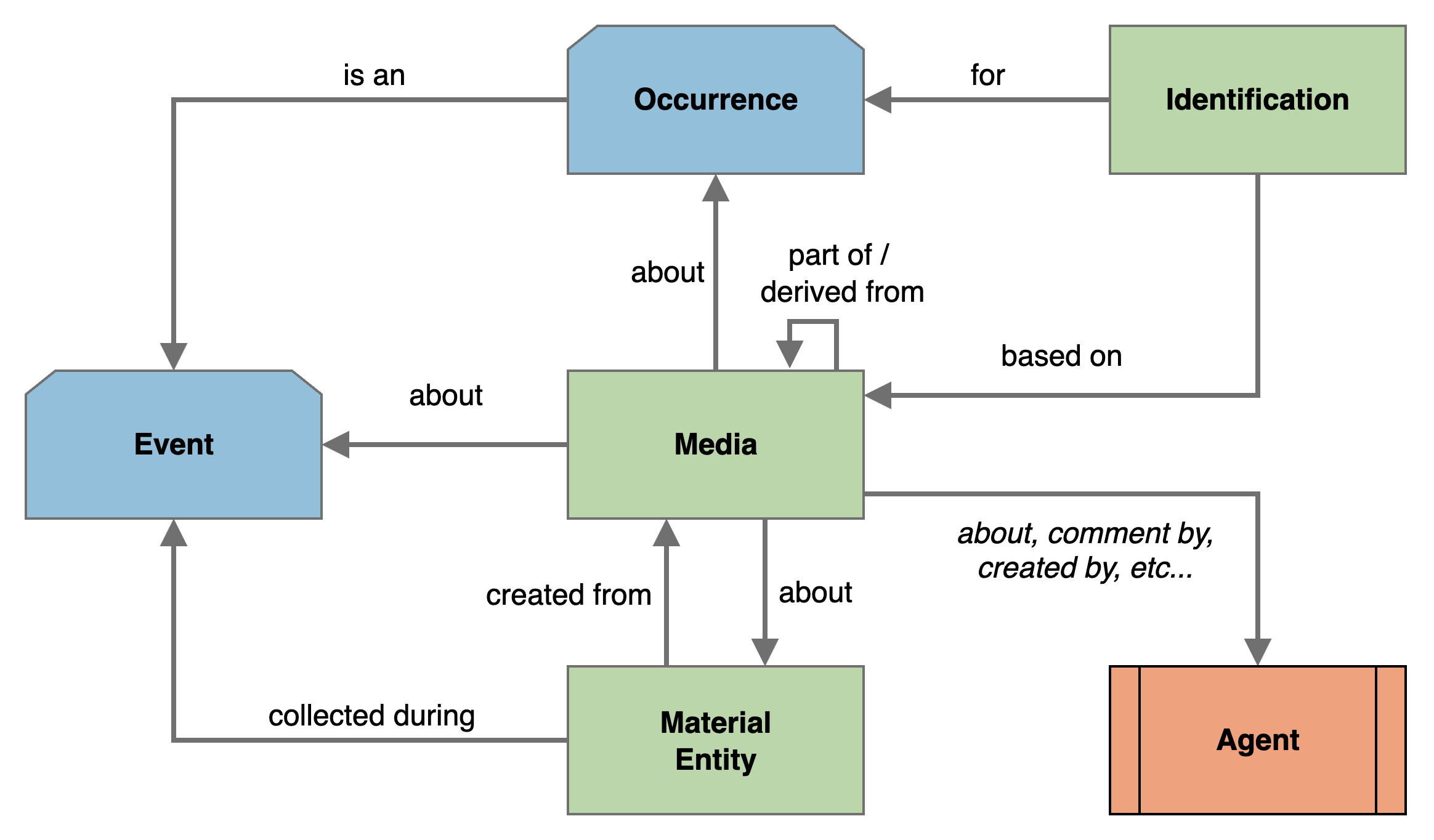
Figure 9. Details of the fundamental relationships associated with Media Entity.
Description
-
A Media Entity can be about a wide variety of subject matter, including Agents, Events, Material Entities, and Occurrences.
-
One Media Entity instance can have many subjects and each subject can be in many Media Entity instances.
-
A Media Entity can be used as the basis for making an Identification of an Organism either via an Occurrence (e.g., a sound recording of a bird) or via a Material Entity (e.g., an image of a specimen).
-
A Material Entity might be created from Media Entity (e.g., 3D printed model of a skull from a 3D digital model).
-
In some cases, relationships need to be made to specific “regions of interest” within a Media Entity (e.g., a segment of a video or sound track or a region within an image). A region of interest can be treated as a Media Entity instance that is part of its parent Media Entity instance.
Simplifications
This section does not illustrate all anticipated uses of Media Entities. For example, relationships of Media Entity to Chronometric Age, Geological Context, and Organism Interaction are not shown.
3 Example implementations (non-normative)
- The Darwin Core Data Package Guide specifies how to create Frictionless Data packages using Darwin Core terms. A Darwin Core Data Package (DwC-DP) consists of schemas for describing tabular data, such as CSV files. DwC-DP is considered a reference implementation of the DwC-CM.
- The openDS format provides a JSON Schema for modelling extended information about digital specimens and implements the relevant parts of the DwC-CM.
4 Acknowledgements (non-normative)
The DwC-CM is a synthesis of years of discussion and contributions to Biodiversity Information Standards (TDWG) Interest Groups. The synthesis arose during research towards “Diversifying the GBIF Data Model” within the Global Biodiversity Information Facility work program, which brought additional perspectives from the GBIF community and included a series of iterative approaches to refine and validate both a conceptual model and a data publishing model through a wide variety of biodiversity data use cases. Data structures of many operational systems, including all commonly used open source collection management systems, have been studied and have influenced this model.